











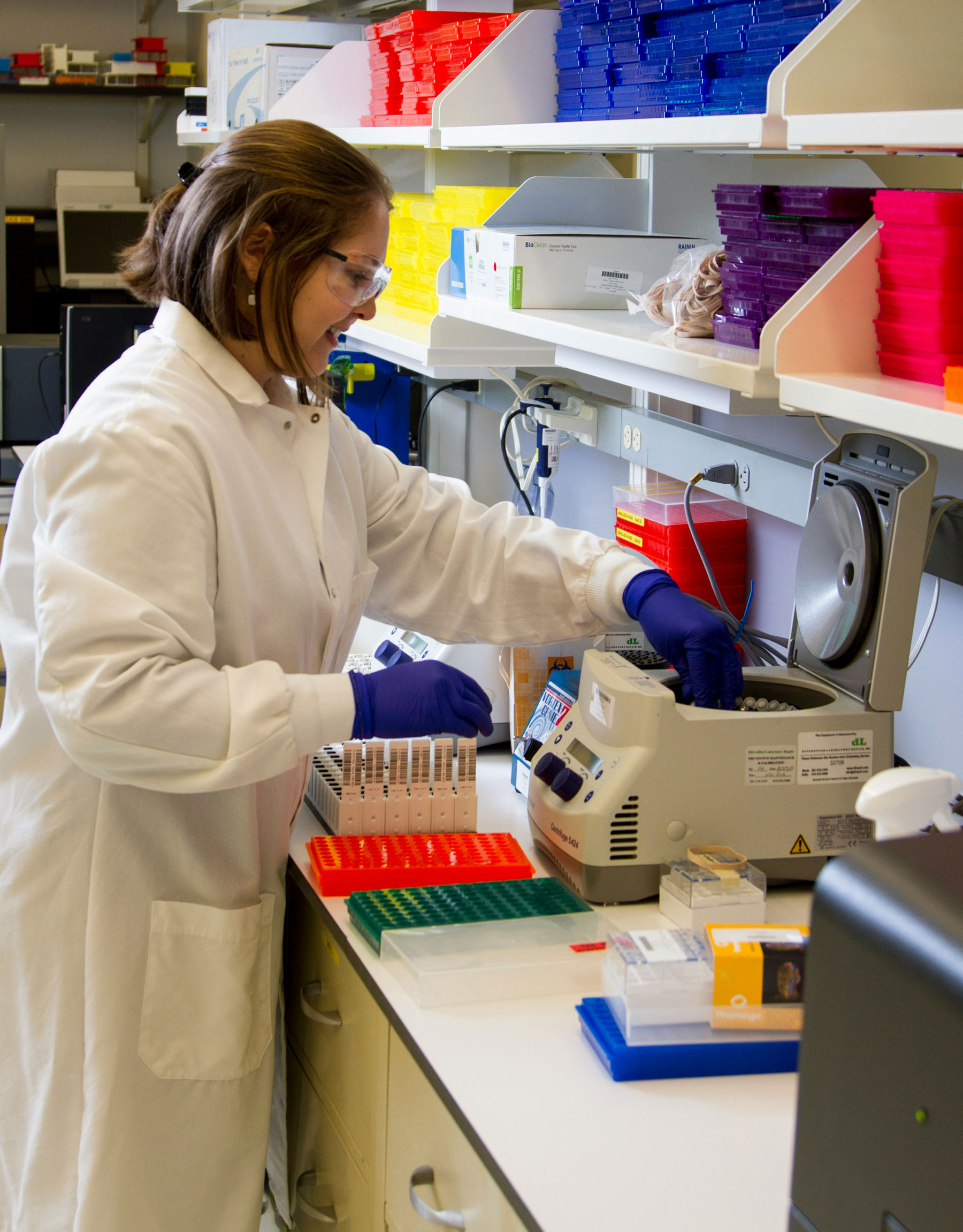
There are four tests that measure the glucose (sugar) levels in blood when testing for type 2 diabetes:1
- Fasting Blood Glucose (FBG) – more correctly referred to as Fasting Plasma Glucose (FPG)*
- Random Blood Glucose (RBG) – more correctly referred to as Random Plasma Glucose (RPG)
- Oral Glucose Tolerance Test (OGTT)
- HbA1c Test
* When discussing diabetes diagnostic tests, the terms Blood Glucose, Plasma Glucose, and Serum Glucose are often used interchangeably but are not the same.
Blood (also called whole blood) is about 55% plasma (the liquid part), and the remaining 45% is made up of red blood cells (erythrocytes), white blood cells, and platelets.4
Blood serum is the plasma with the clotting factors removed. Plasma glucose levels are about 11% higher than in whole blood.3 But there is little difference between glucose values in plasma and serum.3
Whether your GP refers to a blood test or plasma test, Australian pathology labs will conduct a plasma or serum test, which the Royal College of Pathologists of Australia recommends as standard.5
Remember, if your GP uses a referral form for a specific pathology clinic, you do not have to attend that clinic. You can use the referral at any pathology clinic.
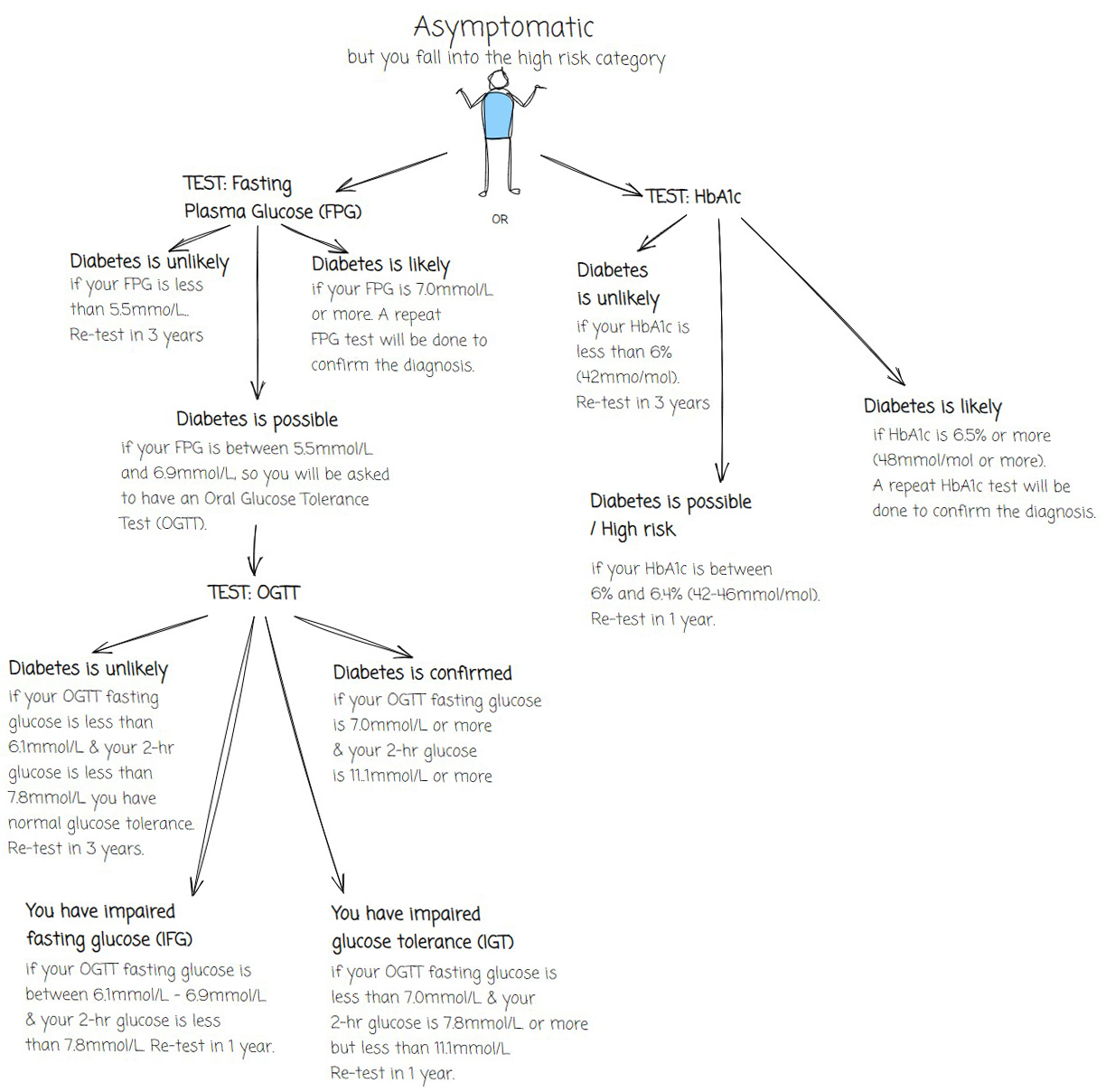
If you don’t have any diabetes symptoms (asymptomatic) but fall into the high-risk category, your GP will order a Fasting Plasma Glucose test or an HbA1c test. Depending on the results, you will need to have a repeat test to confirm a diagnosis.
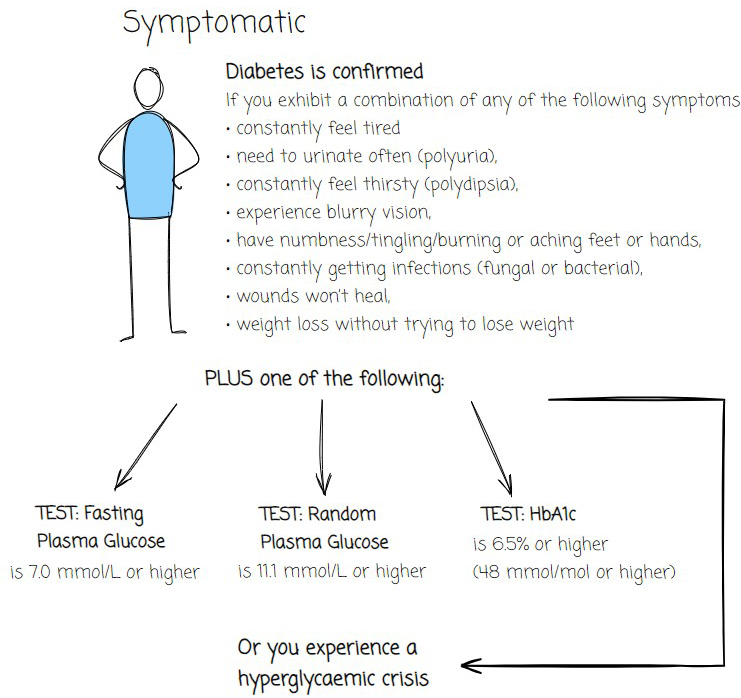
If you have diabetes symptoms (symptomatic), your GP can confirm your diagnosis with a Fasting Plasma Glucose test, an HbA1c test, or a Random Plasma Glucose test.
Scroll down for a detailed explanation of each test.
The Detail:
Fasting Plasma Glucose (FPG)
- An FPG test measures the amount of glucose in your plasma when the blood is taken. This test can diagnose people with diabetes symptoms (symptomatic) or without (asymptomatic) diabetes symptoms.1
- This test may also be used to detect impaired fasting glucose (IFG)
- You must fast (no food or drinks other than water) for at least eight hours, although 10 to 12 hours of fasting is preferred.3
- Talk to your GP about any medication you currently take and what you might need to do differently during fasting.3
- Arrange to have the test done first thing in the morning for more accurate results.6 It will also make the fasting process much more manageable.
- The test is covered under the Medicare Benefits Scheme. You can call your local pathology clinic to ensure they bulk bill this test.3
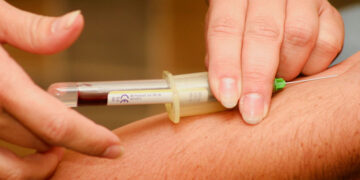
- A vial of your blood will be collected from a vein (venous blood) and sent to a pathology lab for separation before testing the glucose level in the plasma.
FPG results for asymptomatic people:
For a diagnosis of diabetes using fasting plasma glucose, the result must be greater than or equal to 7 millimoles of glucose per litre of plasma (or serum). This is written as ≥7.0 mmol/L.1,2 You will be asked to have a repeat fasting plasma glucose test to confirm the diagnosis.
If your glucose levels are between 5.5mmol/L and 6.9mmol/L, diabetes is possible, so you will be asked to undertake an Oral Glucose Tolerance Test (OGTT).1
If your glucose levels are below 5.5mmol/L (<5.5 mmol/L), then diabetes is unlikely, and your GP will request you retest in three years if you are asymptomatic and in the high-risk category.
FPG results for people with diabetes symptoms:
For a diagnosis of diabetes, the fasting plasma glucose result must be equal to or greater than 7.0 mmol/L (≥7.0 mmol/L).
Unless the GP feels there is enough uncertainty about the cause of the symptoms suggesting diabetes (for example, the symptoms of hyperglycaemia could be caused by another medical illness), this test does not need to be repeated to confirm a diagnosis of diabetes.
Random Plasma Glucose (RPG)*
- It measures the amount of glucose in your plasma when the blood is taken.
- This test does not require fasting and can be done at any time of the day.
- The test is covered under the Medicare Benefits Scheme. You can call your local pathology clinic to ensure they bulk bill this test.
- A vial of your blood will be collected and sent to a pathology lab for separation before testing the glucose level in the plasma.
- The results will be sent to your GP, who will request a follow-up appointment to discuss the next steps.
The Royal Australian College of General Practice (RACGP) recommends this test only be used to diagnose diabetes when the person being tested already shows symptoms of high glucose levels (hyperglycaemia).1 For a confirmed diagnosis of diabetes in the presence of symptoms, the RPG result must be greater than or equal to 11.1 mmol/L (≥11.1 mmol/L).1
Oral glucose tolerance test (OGTT)7 for type 2 diabetes
- This test is only recommended1 for diagnosing people with type 2 diabetes when they are asymptomatic, they fall into the high-risk category, and their fasting glucose levels are between 5.5mm and 6.9mmol/L, making diabetes possible.
- The OGTT test assesses how well the body can metabolise glucose (return blood glucose to homeostasis – see What is Type 2 Diabetes to explain this process).
- It is the only test able to detect impaired glucose tolerance (IGT), and it can also detect impaired fasting glucose (IFG)
- There are four parts to the test7
- For three days before the test, each day, you will need to eat 150g of carbohydrates (this equates to approximately ten 40g slices of bread per day)
- From 10 pm the night before the test, you will need to fast (no food or drinks other than water), and you should not smoke during this fasting period. Talk to your GP about any medication you currently take and what you might need to do differently during fasting.3
- First thing in the morning, blood is taken, and then you will consume a glucose drink (75g for adults). You will be asked to remain seated and not eat or drink anything other than water for two hours.
- After two hours, blood will be taken again
- The test is covered under the Medicare Benefits Scheme. You can call your local pathology clinic to ensure they bulk bill this test.
- The two vials of blood will be collected and sent to a pathology lab to test the glucose levels.
- The results will be sent to your GP, who will request a follow-up appointment with you to discuss them and the next steps.
For a diagnosis of diabetes using OGTT, the fasting glucose must be greater than or equal to 7 millimoles of glucose per litre of blood plasma (≥7.0 mmol/L), and the two-hour glucose must be greater than or equal to 11.1mmol/L (≥ 11.1mmol/L).1,2
You are considered to have impaired glucose tolerance (IGT)1 if your fasting glucose levels are over 7.0 mmol/L (≥7.0 mmol/L) and your two-hour glucose is greater than or equal to 7.8 mmol/L but less than 11.1 mmol/L (≥7.8 mmol/L and <11.1 mmol/L). In this case, you will need to be retested in one year.1
You are considered to have impaired fasting glucose (IFG) if your fasting glucose is between 6.1–6.9 mmol/L and your two-hour glucose is less than 7.8 mmol/L (<7.8 mmol/L). In this case, you will need to be retested in one year.1
If your fasting glucose is less than 6.1 mmol/L (<6.1 mmol/L) and your two-hour glucose is less than 7.8 mmol/L (<7.8 mmol/L), you are considered to have normal glucose tolerance, and diabetes is unlikely. In this case, you will need to be retested in three years.
Please note there are different OGTT diagnostic criteria for Gestational Diabetes.
Relying on measuring glucose in the blood can be problematic. Glucose levels can vary depending on the time of day the blood sample is collected and the material of the tube in which it is collected.8 For this reason, repeat tests are required.
The downsides of an OGTT test are that it is time-consuming, and often, the glucose load causes nausea, vomiting and delayed gastric emptying, which can cause invalid results, requiring the test to be repeated.8
Glycated haemoglobin (HbA1c)
- The HbA1c test can be used for people with or without diabetes symptoms.1
- It measures blood glucose levels over the preceding two to three months.10
- Glycated Haemoglobin (HbA1c) forms when the haemoglobin protein in red blood cells (erythrocytes) bonds with glucose. While the rate of this process (glycosylation) depends on the blood glucose levels, the concentration of HbA1c is influenced by both blood glucose levels and the lifespan of erythrocytes, which is approximately 120 days).9 Newly formed erythrocytes do not have any HbA1c while those at the end of their life before being removed, have the most.10
- This blood test has no fasting or sample time of day restrictions.8
- The test is covered under the Medicare Benefits Scheme. You can call your local pathology clinic to ensure they bulk bill this test.
- A vial of your blood will be collected and sent to a pathology lab for an HbA1c assay to measure the average percentage of HbA1c across all the erythrocytes.
- The results will be sent to your GP, who will request a follow-up appointment to discuss the next steps.
Results for asymptomatic people:
For a diabetes diagnosis, your HbA1c must be equal to or greater than 6.5% or 48mmol/mol (≥6.5% or ≥48 mmol/mol). You will need a repeat HbA1c blood test to confirm the diagnosis.1
If your HbA1c result is between 6 and 6.4% or between 42 and 46 mmol/mol, diabetes is possible, or you are at high risk of developing diabetes. You will be asked to retest in one year.1
If your HbA1c is less than 6% or 42 mmol/mol (<6% or <42 mmol/mol), diabetes is unlikely, and you will be asked to retest in three years if indicated.1
The HbA1c test may not accurately diagnose diabetes in people with conditions that could affect red blood cells or their survival time, such as anaemia.8
Results for symptomatic people:
For people with symptoms of hyperglycaemia, a single HbA1c equal to or greater than 6.5% or 48 mmol/mol (≥6.5% or ≥ 48 mmol/mol) is all that is required to confirm a diagnosis of diabetes.1
SUMMARY OF THE CRITERIA FOR THE DIAGNOSIS OF TYPE 2 DIABETES
In asymptomatic people:1,2
- Fasting plasma glucose ≥7.0 mmol/L with a repeat test to confirm.
- Oral glucose tolerance test (75g): fasting glucose ≥7.0 mmol/L or 2 hr glucose ≥11.1 mmol/L
- HbA1c ≥6.5% (≥48 mmol/mol) with a repeat test to confirm.
In people with symptoms of hyperglycaemia:1
Only one of the following test results is required to confirm a diagnosis of diabetes in people with systems of high blood glucose (hyperglycaemia).
- a single elevated FBG ≥7.0 mmol/L
- single HbA1c ≥6.5%
- a random blood glucose ≥11.1 mmol/L
- or they are experiencing a hyperglycaemic crisis
For an explanation of mmols Nursing Times has an excellent explanation here: https://www.nursingtimes.net/students/an-easy-guide-to-mmols-09-02-2012/
References
- The Royal Australian College of General Practitioners and Diabetes Australia (RACGP). Management of type 2 diabetes: A handbook for general practice https://www.racgp.org.au/clinical-resources/clinical-guidelines/key-racgp-guidelines/view-all-racgp-guidelines/diabetes/introduction
- ADS Clinical Standards/Guidelines Advisory Committee, The Australian Diabetes Society Position Statement: Guidance concerning the use of glycated haemoglobin for the diagnosis of diabetes mellitus. Updated May 2023. Available from https://www.diabetessociety.com.au/guideline/hba1c-for-diagnosis-of-diabetes-mellitus-may-2023/
- D.B. Sacks, M. Arnold, et al., Consensus Report July 20, 2023: Guidelines and Recommendations for Laboratory Analysis in the Diagnosis and Management of Diabetes Mellitus, Diabetes Care 2023;46(10):e151–e199 https://doi.org/10.2337/dci23-0036
- American Society of Hematology https://www.hematology.org/education/patients/blood-basics
- Royal College of Pathologists of Australia https://www.rcpa.edu.au/Manuals/RCPA-Manual/Pathology-Tests/G/Glucose
- R.J Troisi, C.C. Cowie, et al., Diurnal variation in fasting plasma glucose: implications for diagnosis of diabetes in patients examined in the afternoon, JAMA. 2000;284(24):3157-3159. doi:10.1001/jama.284.24.3157 https://jamanetwork.com/journals/jama/fullarticle/193391
- P.J. Phillips, Oral glucose tolerance testing, AFP 2012; 41(6) https://www.racgp.org.au/afp/2012/june/oral-glucose-tolerance-testing
- M.C. d’Emden, J.E. Shaw, et al., The role of HbA1c in the diagnosis of diabetes mellitus in Australia, Med J Aust 2012; 197 (4): 220-221. doi: 10.5694/mja12.10988 https://www.mja.com.au/journal/2012/197/4/role-hba1c-diagnosis-diabetes-mellitus-australia
- R.R. Little, C.L. Rohlfing, HbA1c Standardization: Background, Progress and Current Issues. Laboratory Medicine, Volume 40, Issue 6, June 2009, Pages 368–373, https://doi.org/10.1309/LM3DUSEIBXHTVZ70 https://academic.oup.com/labmed/article/40/6/368/2504849
- P.J. Phillips, HbA1c and monitoring glycaemia, AFP 2012; 41(1) https://www.racgp.org.au/afp/2012/january-february/hba1c-and-monitoring-glycaemia