














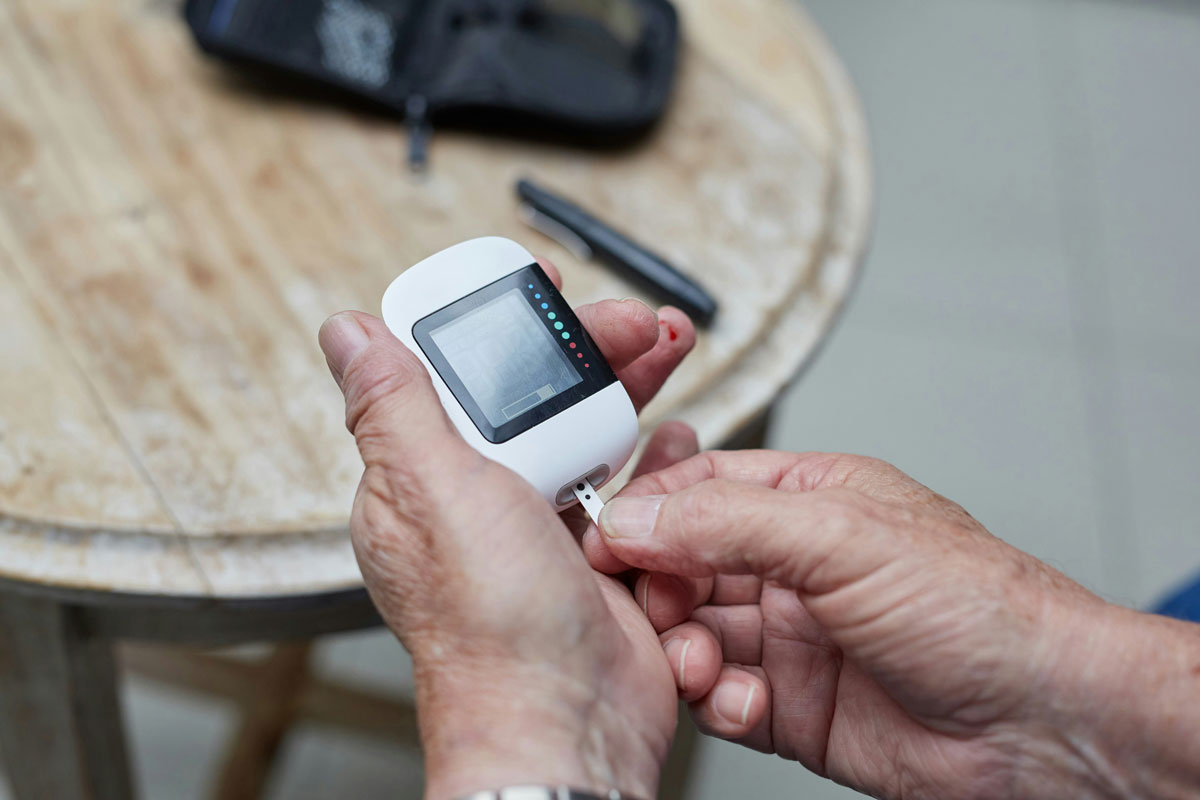
Type 2 diabetes is one of the most prevalent chronic diseases worldwide, with an estimated 462 million people affected.1
It occurs when the pancreas doesn’t produce enough of the glucose-regulating hormone insulin and the body is resistant to the insulin it does still produce. This results in abnormally high blood glucose (blood sugar) levels, known as hyperglycaemia.2
For effective management of type 2 diabetes, the Royal Australian College of General Practitioners (RACGP) suggests maintaining blood glucose levels between 4 and 7 mmol/L during fasting and between 5 and 10 mmol/L after meals.3
What causes blood sugar to rise?
Blood glucose comes from three sources:2
1. Consuming carbohydrates
Carbohydrates are converted into glucose, which is transported through the wall of the small intestine into the bloodstream. Within the liver, muscle cells, and adipose (fat) tissue cells, the glucose is converted into glycogen for ‘storage’—called glycogenesis—or passed back into the bloodstream.
2. Glycogenolysis
The pancreas releases the hormone glucagon, which activates enzymes that transform glycogen stored in the liver and muscles into glucose, releasing it for energy. This process by liver cells is the main source of glucose for the body during short-term fasting,4,6 such as overnight sleep.
3. Gluconeogenesis
In this process within the liver (and to a lesser extent within the kidneys), glucose is formed from non-carbohydrate sources, such as lactate, amino acids, and glycerol. Gluconeogenesis occurs when blood glucose is too low, and there isn’t enough to fuel the brain and nervous system.5
How the body maintains balanced blood glucose
Glucose is an essential fuel for insulin-dependent body tissues (fat and muscles) and insulin-independent tissues such as the brain and kidneys.7
To maintain normal blood glucose levels, the body must match the amount of glucose used (taken up by cells within the body) with the glucose gained from a meal or produced through glycogenolysis or gluconeogenesis.2
Blood glucose levels are relatively stable when the body is in basal conditions (there is no glucose spike due to eating and no glucose depletion, for example, due to vigorous exercise). The body’s production of glucose and its use of glucose are balanced.6
When blood glucose dips (for example, during fasting overnight or vigorous exercise), the pancreas releases the hormone glucagon to activate glycogenolysis, turning stored glycogen back into glucose.6
After a meal, it is normal to have a spike in blood glucose. In response to the rise in blood glucose, to bring the levels back to balance, the pancreas releases insulin, which:
- triggers the cells of muscles and adipose tissues to take up glucose
- stimulates glycogenesis (converts glucose into the storage form glycogen)
- inhibits glycogenolysis by blocking the release of glucagon by the pancreas6
To maintain glucose balance the following three factors must all work:7
- The pancreas must be able to release enough insulin quickly when needed (e.g., during vigorous exercise) but also be able to release insulin in a sustained way.
- The ability of insulin to inhibit Glycogenolysis and support glucose uptake by insulin-sensitive tissues (insulin sensitivity)
- The glucose must be able to enter cells in the absence of insulin
Type 2 diabetes and blood glucose
In type 2 diabetes, two main system failures result in high blood glucose:7
- Insulin resistance: The decreased ability for insulin-dependent tissues to take up glucose or the ability for insulin to stop glucagon from converting stored glycogen into glucose.7
- Insulin deficiency: the pancreas cannot compensate for the insulin resistance by producing more insulin.7
It is important to acknowledge that while obesity is a risk factor for type 2 diabetes, there are people who are within the healthy weight range who develop type 2 diabetes and have a higher risk of mortality8 and there are people with ‘healthy’ obesity who do not have type 2 diabetes.9
References:
- M.A.B. Khan, M.J. Hashim, et al., Epidemiology of Type 2 Diabetes – Global Burden of Disease and Forecasted Trends, J Epidemiol Glob Health. 2020 Mar; 10(1): 107–111. https://doi.org/10.2991/jegh.k.191028.001
- D. Giugliano, A. Ceriello, et al., Glucose metabolism and hyperglycemia, https://doi.org/10.1093/ajcn/87.1.217S
- The Royal Australian College of General Practitioners and Diabetes Australia (RACGP). Management of type 2 diabetes: A handbook for general practice https://www.racgp.org.au/clinical-resources/clinical-guidelines/key-racgp-guidelines/view-all-racgp-guidelines/diabetes/introduction
- A. Gupta, Understanding Insulin and Insulin Resistance, 2021, https://doi.org/10.1016/C2018-0-04821-5
- N.V. Bhagavan, CHAPTER 15 – Carbohydrate Metabolism II: Gluconeogenesis, Glycogen Synthesis and Breakdown, and Alternative Pathways, Medical Biochemistry (Fourth Edition) 2007, https://doi.org/10.1016/B978-012095440-7/50017-2
- L. Bich, M. Mossio, et al., Glycemia Regulation: From Feedback Loops to Organizational Closure Front Physiol. 2020; 11: 69. Published online 2020 Feb 18. https://doi: 10.3389/fphys.2020.00069
- C.R Kahn, Insulin Action, Diabetogenes, and the Cause of Type II Diabetes, Diabetes 1994;43(8):1066–1085 https://doi.org/10.2337/diab.43.8.1066
- S.J. Han, E.J. Boyko, The Evidence for an Obesity Paradox in Type 2 Diabetes Mellitus, Diabetes Metab J. 2018 Jun; 42(3): 179–187. Published online 2018 May 31. https://doi.org/10.4093/dmj.2018.0055
- D.P Schuster, Obesity and the development of type 2 diabetes: the effects of fatty tissue inflammation, Diabetes, Metabolic Syndrome and Obesity, 3, 253–262. https://doi.org/10.2147/dmsott.s7354
Photo by Sweet Life on Unsplash